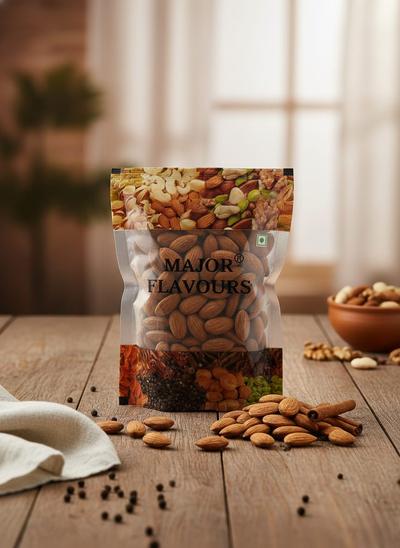
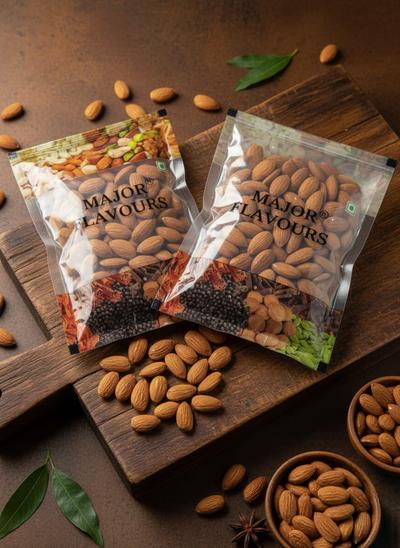
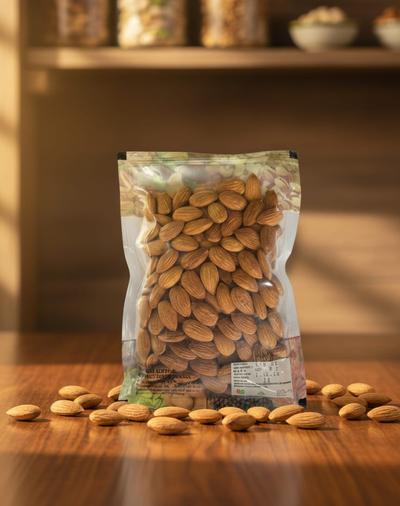
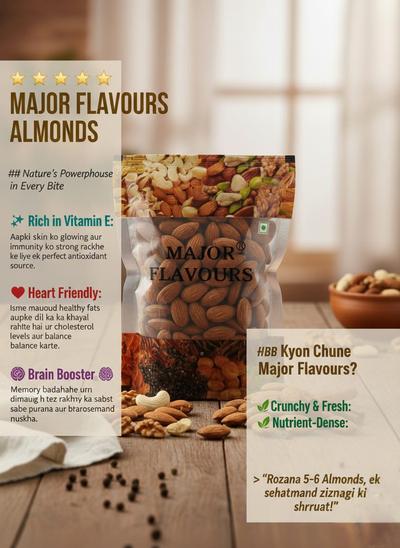
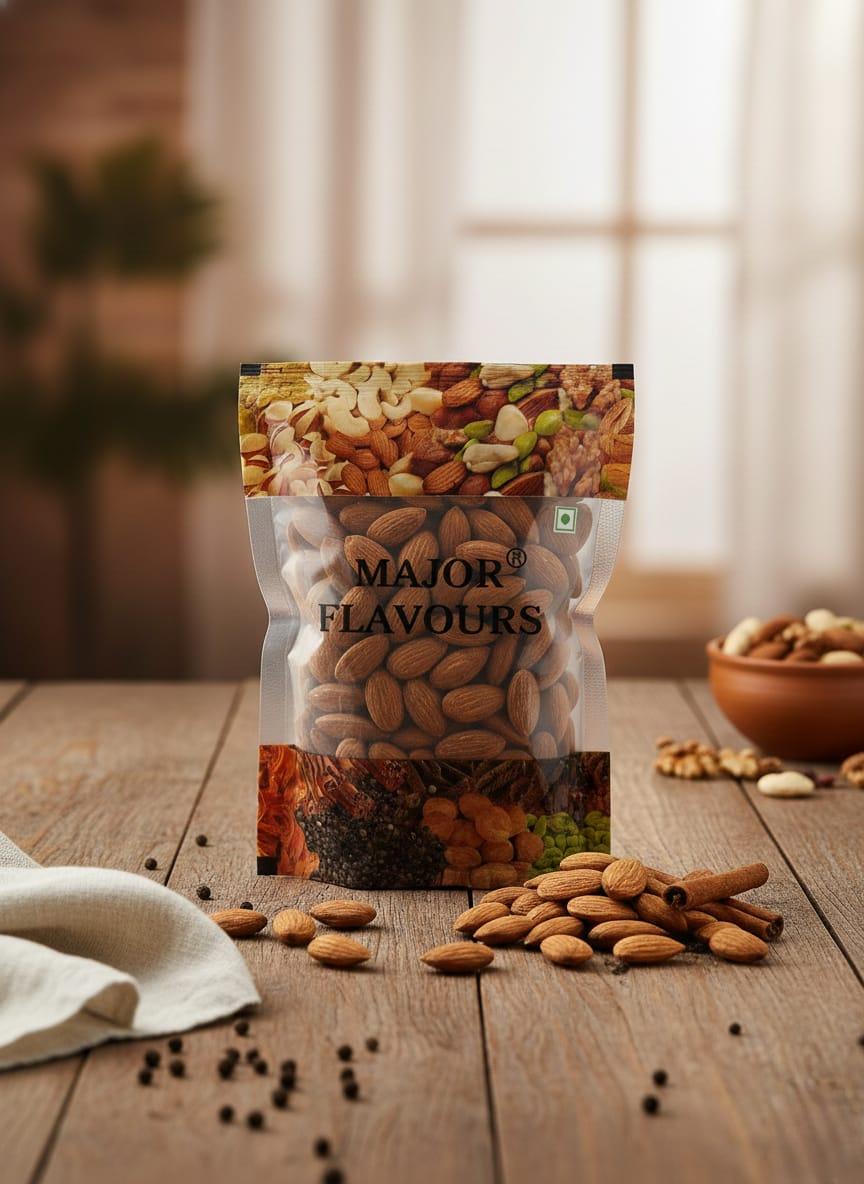
Badam Jumbo American
17 % OFF
MAJOR

Badam Jumbo American

Your are saving 17%
Pack Size
250 gm
1 kg
₹ 291 ₹ 350
Share
Inclusive of all Taxes

Product Information

"Badam" is the common name used in many South Asian languages (including Hindi, Urdu, Marathi, etc.) for the Almond.

Almonds are one of the world's most popular and nutritious nuts, valued for their versatile culinary uses and extensive health benefits.

Here is a comprehensive overview of Badam (Almonds):

🥜 What is Badam (Almond)?

  • Botanical Classification: Although commonly referred to as a nut, the almond is botanically the seed of the fruit of the almond tree (Prunus dulcis). The fruit is a drupe, similar to a peach, and the edible almond is inside the hard shell (or pit).

  • Appearance: Almonds are tear-drop shaped and typically have a brown, leathery skin (often called the skin or pellicle) covering a pale, cream-colored kernel.

  • Flavor Profile: They have a mild, sweet, and buttery flavor and a firm, satisfyingly crunchy texture when eaten raw or roasted.

  • Cultivation: The almond tree is native to the Middle East, but today, the United States (California) is the world's largest producer.

💪 Key Health Benefits of Badam

Almonds are a true nutritional powerhouse, earning their reputation as a "superfood." A one-ounce serving (about 23 almonds) is packed with essential nutrients:

Nutrient HighlightBenefitVitamin EVery rich source; a powerful antioxidant that protects cells from damage and supports skin and eye health.MagnesiumEssential for muscle and nerve function, blood sugar control, and regulating blood pressure.Healthy FatsHigh in monounsaturated fats, which are key for promoting heart health by helping to lower "bad" (LDL) cholesterol.Protein & FiberProvides about 6 grams of protein and 3.5 grams of fiber per serving, promoting satiety (feeling of fullness) and aiding in weight management.Calcium & PhosphorusImportant minerals that work together to contribute to bone strength and health.AntioxidantsFound primarily in the brown skin of the almond, these compounds help fight inflammation and aging.

🍽️ Uses in Cuisine and Products

Almonds are incredibly versatile and used across global cuisines, especially in Indian (Mughlai) and Middle Eastern cooking:

  • Snacking: Eaten whole—raw, soaked (which aids digestion and nutrient absorption), dry-roasted, or salted.

  • Indian Sweets (Mithai): Used extensively in traditional desserts like Badam Halwa (almond pudding), Badam Barfi (almond fudge), and as a garnish for Kheer and Sheera.

  • Beverages: Used to make creamy and nutritious drinks like Badam Milk (flavored with cardamom) and Thandai.

  • Savory Dishes: Almond paste is often used as a thickening agent in rich, creamy gravies for Mughlai and Pasanda curries to add richness and texture.

  • Baking & Desserts: Ground into Almond Flour (a popular gluten-free alternative), and used to make famous items like Marzipan, Macarons, and Frangipane.

  • Dairy Alternatives: Used to produce popular plant-based products like Almond Milk and Almond Butter.

Product Description

🥜 Badam (Almond)

The almond is one of the most popular and recognizable nuts worldwide, beloved for its mild sweetness and versatility.

1. Appearance and Structure

  • Shape: Almonds are typically tear-drop or oval-shaped, with a slightly flattened profile.

  • Size: They are medium-sized nuts, generally ranging from half an inch to an inch in length.

  • Skin (Pellicle): When sold as whole nuts, they are covered in a thin, brown, leathery skin. This skin is edible but can sometimes be removed (blanching) to reveal the pale kernel underneath.

  • Kernel Color: Once the skin is removed (blanched), the kernel is a smooth, pale cream or off-white color.

2. Texture and Mouthfeel

  • Raw: Raw almonds offer a firm, solid crunch with minimal oiliness.

  • Roasted: Roasting enhances the crunch and brings out the oils, resulting in a more crisp, dense, and crunchy texture.

  • Blanched: Blanched almonds (with the skin removed) have a slightly softer initial bite and a very smooth mouthfeel.

  • Soaked: Soaking overnight yields a tender, slightly chewy texture, which is a common way to consume them in many cultures.

3. Flavor Profile

The almond's flavor is known for its delicacy and adaptability, making it suitable for both sweet and savory applications.

  • Primary Flavor: The dominant taste is mildly sweet, delicate, and pleasant, without the bitterness found in some other nuts.

  • Aromatic Notes: It has a subtle, earthy buttery aroma when chewed.

  • Skin Effect (Tannins): The brown skin contains tannins, which can lend a very slight, almost imperceptible bitter edge to the flavor. This is why many chefs prefer blanched almonds for baking where purity of flavor is key.

  • Comparison: Compared to a walnut (strong, bitter) or a pistachio (earthy, slightly sweet), the almond's flavor is neutral and clean, allowing it to pair well with stronger flavors like vanilla, chocolate, and spices (e.g., cardamom and saffron).

In summary, the Badam is a firm, oval-shaped nut with a brown skin that delivers a mild, sweet, and buttery flavor and a satisfyingly solid crunch when eaten whole.

© 2026 Major. All Rights Reserved.